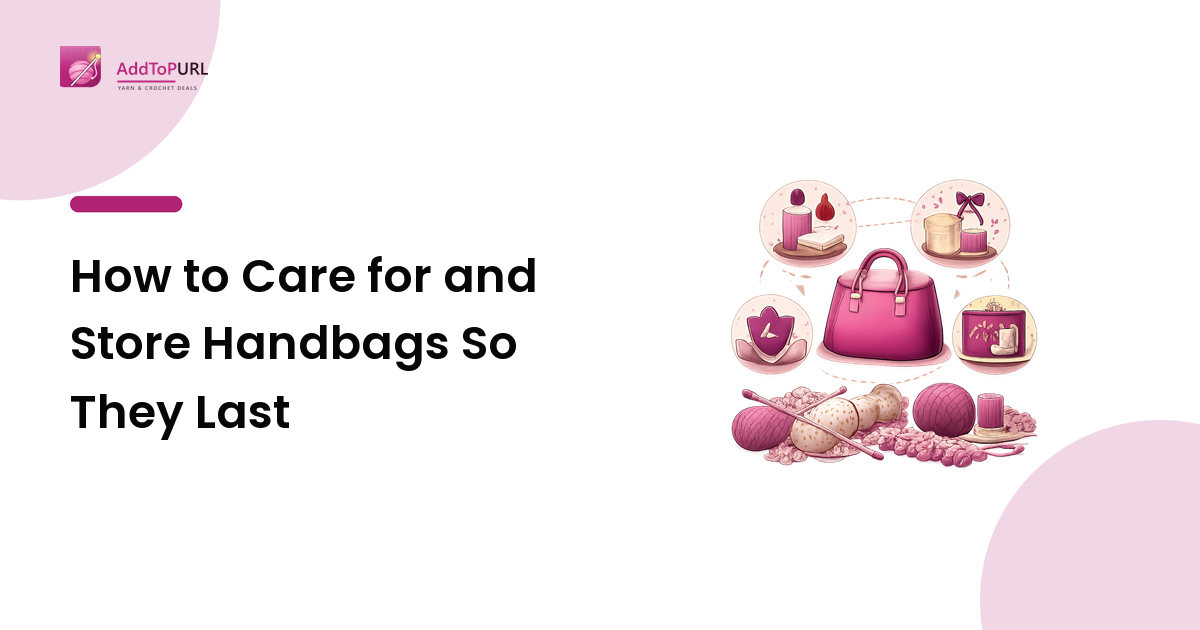
Anyone who has hand-washed a wool sweater and watched it felt knows that care is what decides whether a fiber product lasts. A handbag is no different. The leather, the PU, the lining, the hardware, and the stitching all behave like the materials they are — and a few habits, the same kind of care logic behind blocking, washing, and finishing handmade pieces, extend a bag's life from one season to many years. This guide covers the care and storage routines that keep a handbag looking the way it did the day you bought it.
Why Care Matters More Than Price
A well-cared-for mid-priced bag will outlast a neglected expensive one. Leather dries and cracks without conditioning; PU peels if stored badly; hardware tarnishes in humidity; stitching fails when a bag is overstuffed or hung by its strap. None of these are material defects — they are care gaps. The good news is that every one of them is preventable with a short, repeatable routine.
Leather Handbags: Condition, Clean, Protect
Leather is a natural fibre product, and it behaves like one — it needs moisture to stay supple.
- Condition every 2–3 months. Use a small amount of a quality leather conditioner on a soft cloth, work it in in circles, and let it absorb. This prevents the drying and cracking that ends most leather bags. Skip the conditioner on suede and nubuck (they need a dedicated brush and protector instead).
- Spot-clean only. Damp cloth, mild soap if needed, blot — never soak. Most structured leather bags are not made for submersion, and water stains set fast.
- Keep it out of prolonged direct sun. UV dries leather and fades dyes. A bag left on a sunny car dashboard for a week ages more than a year of normal use.
- Use a leather protector spray on finished leather for a water-repellent layer — test on an inconspicuous spot first.
PU and Synthetic Handbags: Clean Gently, Store Dry
PU (polyurethane) and other synthetics behave more like coated fabrics — they need less moisture but more protection from heat and folding.
- Wipe with a damp cloth. PU cleans easily with a soft damp cloth and mild soap if needed. Avoid alcohol-based cleaners, which can break down the coating.
- Prevent peeling. PU peels when it dries out or is stored folded under pressure. Store flat, unstressed, and away from heat sources (radiators, hot cars).
- Avoid over-conditioning. PU does not absorb leather conditioner the way real leather does; a light wipe with a damp cloth is usually enough. Heavy conditioner can leave a residue.
- Watch the fold points. The places a bag creases when carried are where PU fails first. Rotating between bags lets each crease rest.
Hardware: Protect the Metal
Hardware is the first thing to look tired on a neglected bag.
- Keep zippers working. Run a zipper occasionally even when not using the bag; a stuck zipper seizes. A tiny amount of zipper lubricant or beeswax on a metal zipper keeps it gliding.
- Wipe hardware dry. After rain or a spill, dry clasps, chains, and D-rings with a soft cloth to prevent tarnish.
- Store with hardware tucked in where possible, so metal is not pressing against leather or PU and leaving marks.
Storage: The Single Biggest Lifespan Factor
How a bag is stored decides whether it holds its shape and survives the off-season.
- Store stuffed and upright. Stuff the bag with tissue paper, a soft cloth, or a dedicated bag pillow so it holds its shape. An empty bag slumps, creases, and loses its structure over time.
- Use a dust bag. The dust bag that comes with a bag (or a clean cotton pillowcase) keeps dust off the finish and prevents colour transfer from neighbouring items.
- Do not hang by the strap. Hanging a bag by its strap stretches the strap and stresses the attachment points. Store it upright on a shelf or in a cubby.
- Keep it cool and dry. Humidity tarnishes hardware and encourages mould on leather; heat dries and cracks both leather and PU. A cool, dry closet is ideal; a damp basement or a hot attic is not.
- Do not stack heavy things on top. Weight crushes the shape and stresses the hardware.
Rotation: The Underrated Habit
No single bag should take all the daily wear. If you carry the same bag every day for a year, the strap, the base, and the hardware take 365 days of continuous stress with no recovery. Rotating between even two or three bags roughly doubles the life of each one — the materials rest, creases relax, and wear spreads instead of concentrating.
A small collection — one daily tote, a crossbody, a satchel, an evening option — makes rotation natural. Sources like Oh My Replicas make it affordable to cover those distinct silhouettes so each bag gets downtime, which is exactly what extends the life of designer-inspired PU and synthetic pieces.
A Seasonal Care Routine
A short routine, run at the change of each season, keeps every bag in the rotation healthy:
- Empty the bag completely — check every pocket for pens, lip balm, and receipts that stain.
- Spot-clean the exterior with the right method for the material (damp cloth for PU, conditioner for leather).
- Wipe and dry the hardware.
- Stuff and store in a dust bag, upright, cool and dry.
- Rotate to the next bag in the lineup.
Frequently Asked Questions
How often should I condition a leather handbag?
Every 2–3 months for a bag in regular use, and at the start and end of each season for a rotation piece. Less frequent conditioning is fine for bags you rarely carry — the point is to prevent the leather from drying out and cracking.
Can I machine-wash a PU handbag?
No. PU and synthetic handbags should be spot-cleaned with a damp cloth and mild soap. Machine-washing breaks down the coating, the structure, and the hardware.
What is the best way to store handbags?
Store each bag stuffed with tissue or a bag pillow (so it holds its shape), upright on a shelf or in a cubby, inside a dust bag, in a cool dry place. Never hang a bag by its strap, and never stack heavy items on top of it.
How do I stop a PU bag from peeling?
PU peels when it dries out, is stored folded under pressure, or is exposed to heat. Store the bag unstuffed-but-shaped (not creased), away from heat sources, and rotate it so the same fold points are not under continuous stress. Spot-clean gently — avoid alcohol-based cleaners.
Does rotating handbags actually make them last longer?
Yes, significantly. Rotation lets each bag's materials rest — creases relax, leather reabsorbs ambient moisture, and hardware is not under constant load. Carrying one bag daily concentrates a year of wear into a single piece; spreading it across three bags roughly triples the life of each.
Final Thoughts
A handbag's lifespan is mostly a care decision. Condition the leather, spot-clean the PU, protect the hardware, store each bag stuffed and upright in a dust bag, and rotate so no single piece takes all the wear. Run the seasonal routine, keep things cool and dry, and the bags you own — whether full-grain leather or designer-inspired PU — will look good for years instead of one season.